
Ecology Surveys for Planning Applications
Get in touchAt Nationwide Ecology, we offer ecology surveys for planning applications and nearby areas. Our service includes assessments for protected species, habitat evaluations, and biodiversity impact assessments.
These surveys ensure compliance with planning regulations and help identify potential ecological issues that might affect your project. We work with residential, commercial, and industrial developments to facilitate smooth planning approval.
Contact us today to arrange a consultation.
What Is an Ecology Survey for Planning Applications?
An ecology survey for planning applications is an assessment conducted to evaluate the potential ecological impacts of a proposed development. At Nationwide Ecology, we perform these surveys to identify any protected species, habitats, and biodiversity concerns that may influence planning decisions.
Our surveys help you adhere to environmental regulations such as the UK's Wildlife and Countryside Act 1981 and the Conservation of Habitats and Species Regulations 2017.
We use a variety of methods, including Extended Phase 1 Habitat Surveys and Preliminary Ecological Appraisals, to provide a analysis. Depending on the site, additional species-specific surveys might be required for bats, great crested newts, or dormice.
We employ equipment such as bat detectors and camera traps to ensure precise observations.
Understanding local planning policies alongside national legislation is crucial in our process. We aim to support developments while ensuring ecological preservation.
Our team is ready to guide you through every step of the process and maximise the potential of your project while remaining compliant.
What Types of Ecology Surveys Are Available?
Nationwide Ecology offers a range of ecology surveys to suit various planning needs and comply with environmental regulations and guidelines:
Preliminary Ecological Appraisal (PEA): This initial survey assesses site ecology and identifies any further surveys needed. It considers factors such as vegetation types, water bodies, and potential wildlife corridors.
Protected Species Survey: Focused surveys are conducted to detect specific protected species like bats, great crested newts, and dormice. These surveys often require following seasonal guidelines and using specialised techniques such as mist netting for bats or eDNA sampling for newts.
Habitat Survey: This survey provides an assessment of habitats such as woodlands, hedgerows, and wetlands. It involves identifying plant species, habitat structure, and evaluating ecological value using frameworks like the National Vegetation Classification (NVC).
Ecological Impact Assessment (EcIA): A detailed analysis of potential ecological impacts and mitigation strategies. This includes evaluating direct and indirect effects on ecosystems, ensuring compliance with regulations like the Habitats Directive, and suggesting compensatory measures if needed.
Our team is ready to assist you with the survey that best fits your planning application requirements.
When Are Ecology Surveys Needed?
Ecology surveys are needed whenever there is a planning application that might affect local wildlife or habitats. Most developments involving land use changes, new construction, or alterations to existing structures require these surveys.
These surveys are crucial when habitats of protected species, such as bats, newts, or badgers, may be disturbed, as UK law mandates specific assessments like bat activity surveys or great crested newt surveys in such cases.
Authorities may require Preliminary Ecological Appraisals (PEA), which assess baseline ecological conditions and inform more detailed studies if needed. Surveys often follow standard guidelines such as the British Standard 42020 for biodiversity.
Initiating a survey early in the planning process helps address any environmental concerns and avoid delays. The survey timeline can vary seasonally, as certain species surveys are only possible at particular times of the year.
Contact Nationwide Ecology to schedule your survey and ensure your project is ecologically compliant.
How Do Ecology Surveys for Planning Applications Work?
At Nationwide Ecology, our ecology surveys for planning applications follow these steps to ensure compliance with planning regulations and ecological standards:
Initial Consultation: We work closely with developers, architects, and landowners to understand the project scope and requirements. This phase identifies protected species and habitats that may be present and potentially affected.
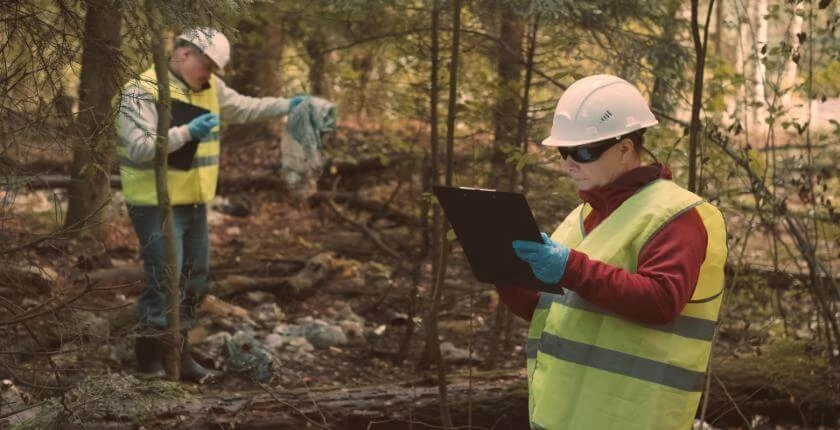
Site Visit: Our ecologists conduct on-site assessments using various methods such as Phase 1 Habitat Surveys and protected species surveys. We may use equipment like bat detectors or employ techniques such as quadrat sampling.
Data Analysis: After collecting data, we evaluate it to determine the ecological impact of the proposed development. This involves analysing species distribution, habitat quality, and compliance with legal requirements such as the Wildlife and Countryside Act 1981 or the Conservation of Habitats and Species Regulations 2017.
Reporting: A detailed report is prepared, including findings, potential ecological impacts, and mitigation strategies to protect local biodiversity. This report aligns with the requirements set by natural resource bodies and planning authorities.
Get in touch to book your survey with us.
How Long Do Ecology Surveys for Planning Applications Take?
Ecology surveys for planning applications typically take two to four weeks, depending on the site and requirements. The duration can vary based on several factors, including the presence of protected species such as great crested newts or bats, which may require additional observation time.
Habitat complexity is another key element: sites that include ancient woodlands or wetlands might need more detailed assessment and potentially longer survey periods.
Seasonal constraints must be considered, as many species are only apparent or active at certain times of year. Conducting surveys during appropriate seasons ensures accurate data collection.
We adhere to guidelines set by the Chartered Institute of Ecology and Environmental Management (CIEEM) to provide reliable results.
We recommend contacting Nationwide Ecology early in your planning phase to accommodate survey schedules. Taking proactive steps can help ensure your planning application proceeds smoothly.
Who Needs Ecology Surveys?
Property developers, architects, and planning consultants usually require ecology surveys to support planning applications. These surveys ensure compliance with ecological regulations and are essential for residential, commercial, and infrastructure projects.
Ecology surveys help identify protected species and habitats, assess potential impacts, and propose mitigation measures to conserve biodiversity.
At Nationwide Ecology, we assist all client types, ensuring ecological assessments align with project goals. We offer various types of surveys such as Extended Phase 1 Habitat Surveys, bat activity surveys using acoustic detectors, and Great Crested Newt surveys.
Our team adheres to standards set by bodies such as the Chartered Institute of Ecology and Environmental Management (CIEEM) to deliver accurate and reliable results. We help our clients meet legal obligations and successfully navigate local planning policies.
Contact us to discuss your project's ecological assessment needs.
How Much Do Ecology Surveys for Planning Applications Cost?
Ecology surveys for planning applications generally cost between £500 and £3,000, dependent on the site size and survey complexity. Various types of surveys like Preliminary Ecological Appraisals (PEAs), Bat Surveys, and Great Crested Newt Surveys might be needed, each with its specific methods and requirements.
For instance, a Bat Survey typically involves dusk and dawn surveys using ultrasonic detectors to record bat activity, while Great Crested Newt Surveys may require multiple visits during breeding season.
The presence of protected species or habitats can also affect the survey's scope and cost, as additional specialised techniques might be necessary. Moreover, larger development sites or those near sensitive areas such as Sites of Special Scientific Interest (SSSIs) may require more extensive investigation.
The type of survey required and the specific regulatory requirements will influence the final price. For a detailed, no-obligation quote, reach out to Nationwide Ecology.
What Are the Benefits of Ecology Surveys?
Ecology surveys offer numerous advantages: they provide a understanding of the local wildlife and habitats, ensuring that any development complies with necessary environmental legislation and standards like the Wildlife and Countryside Act 1981. Our surveys help in identifying protected species and habitats early, using methods such as Phase 1 Habitat Surveys and specific species surveys for bats, newts, and birds, minimising ecological risks.
By offering detailed reports, we support developers in achieving planning consent by demonstrating ecological due diligence and creating design solutions that consider ecological constraints. Ecology surveys also guide biodiversity enhancement measures, such as creating wildlife corridors and integrating green infrastructure.
The information gathered is vital for sustainable development planning, ensuring that projects contribute positively to local ecosystems.
Contact us to schedule an ecology survey and ensure your project meets all ecological requirements.
Why Choose Nationwide Ecology for Ecology Surveys?
Choosing Nationwide Ecology for your ecology surveys means choosing expertise and comprehensive service. Our team of experienced ecologists uses state-of-the-art methods to deliver reliable assessments.
We specialise in a range of surveys, including Phase 1 Habitat Surveys, protected species assessments, and Biodiversity Net Gain calculations, ensuring compliance with local planning regulations. Our ecologists are trained to identify potential habitats for species such as great crested newts, bats, and badgers, following Natural England guidelines.
We use equipment like bat detectors, camera traps, and GPS devices to collect precise data, which is crucial for thorough ecological assessments. Our reports are structured to meet the standards set by the Chartered Institute of Ecology and Environmental Management (CIEEM), providing clear and actionable insights for your project.
We are committed to supporting your planning application while safeguarding ecological integrity.
Contact us today to discuss your specific needs.
Ecology Surveys for Planning Applications: Frequently Asked Questions
How much do ecology surveys cost?
Ecology surveys typically cost between £500 and £3,000. The price depends on the survey's scope and the site's ecological complexity.
How long are ecology survey reports valid?
Survey reports are usually valid for 12 to 18 months, after which a new survey might be required if conditions have changed significantly.
What is included in a Preliminary Ecological Appraisal?
A Preliminary Ecological Appraisal covers initial habitat evaluation, species presence indicators, and recommendations for further surveys.
Why are protected species surveys important for planning?
Protected species surveys are crucial for identifying and mitigating risks to species like bats, which can affect project timelines and compliance.
How do I prepare for an ecology survey?
Prepare by providing site access and relevant project details to Nationwide Ecology. Ensure that any vegetation clearance is postponed until after the survey.
Get a Free Quote for Ecology Surveys for Planning Applications
Contact Nationwide Ecology today to arrange your ecology survey and ensure your development complies with ecological standards.
Related Ecology Surveys for Planning Applications Services
A preliminary ecological appraisal can identify ecological constraints at the planning stage and determine whether further surveys are required. Ecological impact assessment can provide a more detailed evaluation where significant ecological effects may occur.
For developments requiring biodiversity calculations, biodiversity net gain assessment can provide supporting ecological information for the planning process.